
We Earned Our EcoVadis Bronze Medal: What the Submission Process Actually Taught Us
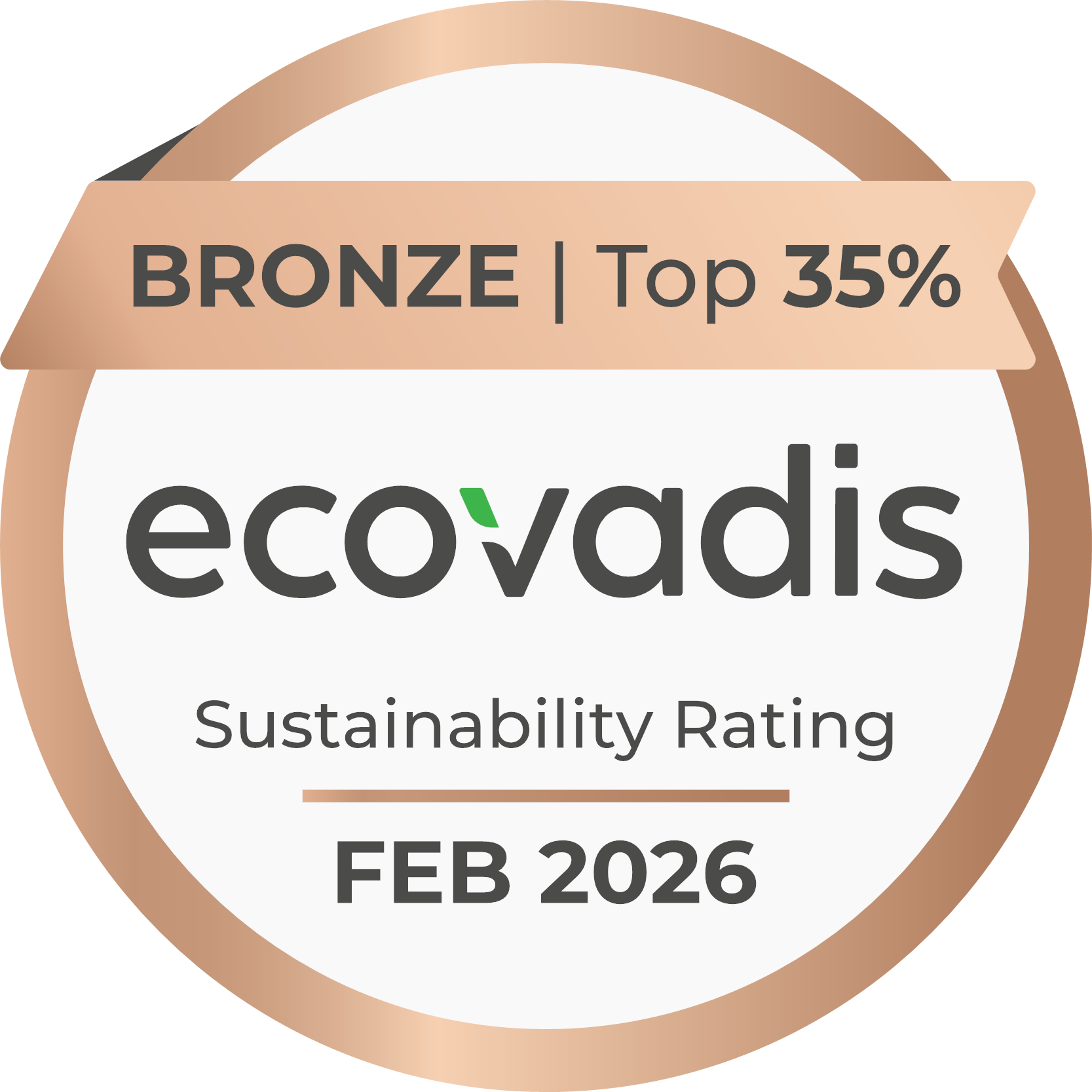
RyeStrategy completed the EcoVadis sustainability assessment, scored a 70, and earned a Bronze medal, placing us in the top 35% of companies globally. Here's what the process looked like from the inside, and what SMB suppliers should know before starting their own EcoVadis submission.
If you work with enterprise buyers, there's a good chance you've already received (or are about to receive) an EcoVadis request. What started as an occasional ask has become a standard procurement requirement for suppliers of all sizes, tied directly to eligibility, contract renewals, and vendor evaluations.
At RyeStrategy, we support SMB suppliers through sustainability disclosures, carbon footprint calculations, and EcoVadis submissions. So when EcoVadis became a recurring topic across our client base, we decided to go through the process ourselves.
We're proud to share that we earned our EcoVadis Bronze medal with a score of 70. That score places us in the top 35% of all businesses assessed through the EcoVadis platform. More than 130,000 companies globally have been rated by EcoVadis, making it one of the most widely recognized frameworks for evaluating supplier sustainability.
The badge matters. But what we learned going through the process is something every SMB supplier should hear before they start.
What Is EcoVadis, and What Does It Actually Evaluate?
EcoVadis is a globally recognized sustainability ratings platform used by enterprise buyers to assess their suppliers' environmental, social, and governance (ESG) practices. The EcoVadis assessment evaluates 21 sustainability criteria across four core themes:
Environment: energy, emissions, water, biodiversity, and materials
Labor & Human Rights: working conditions, health and safety, and labor practices
Ethics: anti-corruption, fair business practices, and data security
Sustainable Procurement: supplier management and responsible sourcing
The EcoVadis score is evidence-based. Every claim you make must be backed by documentation: policies, records, procedures, and proof of active implementation. The assessment is not a questionnaire you can answer quickly. It's a structured audit of how sustainability actually operates inside your business.
An EcoVadis medal or badge is not a certification, and it is not an endorsement of your company's products or services. It reflects the quality of your sustainability management system and your commitment to transparency.
What We Learned Going Through It Ourselves
Documentation Is Everything
We knew EcoVadis was evidence-based going in. What we didn't fully appreciate until we were inside the platform was just how much weight documentation carries.
Intentions don't count. Verbal commitments don't count. Even well-executed practices don't count unless they are formalized, written, and supported with evidence.
We had strong practices in place. But completing the EcoVadis submission pushed us to elevate those practices into structured documentation. It pushed us to close gaps in policy, formalize how things actually work, and make sure what we say we do is verifiable on paper.
Sustainability Has to Be Operational, Not Just a Statement
EcoVadis doesn't evaluate a single initiative or a sustainability page on your website. It evaluates sustainability as a system (the lesser known SaaS).
HR policies matter. Ethics frameworks matter. Data security practices matter. Training records matter. Supplier oversight matters.
This is not a carbon-only questionnaire. It's an operational assessment of whether sustainability is embedded into how your business actually runs: documented, governed, measured, and actively implemented.
Organization Is a Competitive Advantage
Enterprise buyers often give suppliers a short window to complete their EcoVadis submission. If you're starting from scratch when the request arrives, it can feel overwhelming.
The suppliers who are prepared are not necessarily the ones with the most elaborate sustainability programs. They're the ones who have already organized what they have. Starting early means identifying documentation gaps, strengthening weak policies, and pulling together what already exists across your teams.
The assessment is not necessarily difficult. It is thorough. Preparation is not about building a compliance machine overnight. It's about getting organized before the deadline lands in your inbox.
EcoVadis Scoring Is More Nuanced Than It Looks
The EcoVadis scoring process is not fully transparent, and that's useful to know going in. While EcoVadis provides score breakdowns and improvement areas, the exact mechanics behind every point are not visible to the company being assessed.
In some cases, the gap is not your policies. It's the proof. You may be doing the right things operationally, but without the appropriate documentation, historical records, or formalized processes to back those practices up, your EcoVadis score can reflect that absence.
For SMBs, the gap is often not what you're doing. It's whether you've made it verifiable.
What This Reinforced for Us
Going through EcoVadis ourselves strengthened how we support our small business clients.
We now speak about the EcoVadis submission process from our own lived experience, not just advisory experience. We understand the stress and pressure associated with anticipating the score outcome, especially when our clients need to achieve a specific score to satisfy their customer’s supplier sustainability request. We understand the internal coordination required. We understand the documentation. We understand the difference between "we do this already" and "is it formal enough to count?"
For SMBs, this process is not about building a massive compliance infrastructure. It's about putting clear, verifiable systems in place that reflect how you actually operate: written policies, fair labor practices, ethical decision-making, and accountability when something goes wrong.
When you prioritize your people through strong HR policies, consistent training, and visible processes, sustainability stops being a separate initiative. It becomes part of how you run the business, which also means your business will benefit in all areas as well.
Where to Begin Preparing for an EcoVadis Submission
If you've been asked to complete EcoVadis, or think the request is coming, the best first step is simple: take inventory.
You likely have more in place than you think. The goal is not to rebuild your business from scratch. It's to clarify, strengthen, and organize what already exists across the four assessment themes: Environment, Labor & Human Rights, Ethics, and Sustainable Procurement.
A few practical starting points:
Review your existing policies. HR policies, environmental commitments, ethics or code of conduct documentation, and supplier guidelines all contribute to your EcoVadis score.
Check your evidence. Policies need supporting proof: training logs, audits, signed documents, or records showing consistent application.
Identify your gaps early. Some areas take time to address. Starting with a gap assessment gives you room to build documentation before the submission deadline.
Don't underestimate the labor and ethics themes. Many SMBs focus on environmental criteria and underinvest in the labor and ethics sections, which carry significant weight in the overall EcoVadis score.
We’ve created this EcoVadis Readiness Template (Google Sheet) that you are welcome to use. Our sustainability managers utilize this tool with our clients to collect and prepare evidence for submission.
How RyeStrategy Supports Suppliers Through EcoVadis

When suppliers come to us with an EcoVadis request, the first thing we do is assess what already exists, identify documentation gaps, and clarify what needs strengthening versus what simply needs organizing.
For companies that haven't yet formalized their carbon footprint, we provide Scope 1, 2, and 3 calculations. For teams with informal practices, we help build documentation that accurately reflects current processes. For organizations working through the submission itself, we guide the process strategically, helping align submissions with EcoVadis criteria in a way that is clear, accurate, and grounded in what you actually do.
We don't treat EcoVadis as a box-checking exercise. We treat it as an opportunity to strengthen the sustainability infrastructure of your business and help you earn the strongest EcoVadis score your organization is positioned for.
Ready to get started?Talk to a RyeStrategy specialist about our EcoVadis support offering. We guide small and mid-sized businesses through every stage of the EcoVadis submission process, from gap assessment and documentation to submission strategy, with the goal of improving your score and keeping your enterprise relationships intact.
EcoVadis medals and badges recognize companies that have completed the EcoVadis assessment process and demonstrated a strong sustainability management system, as outlined in the EcoVadis methodology. An EcoVadis badge is not a certification and does not indicate that a company's products or services are specifically sustainable or more sustainable than another company's.
